

18 January 2026
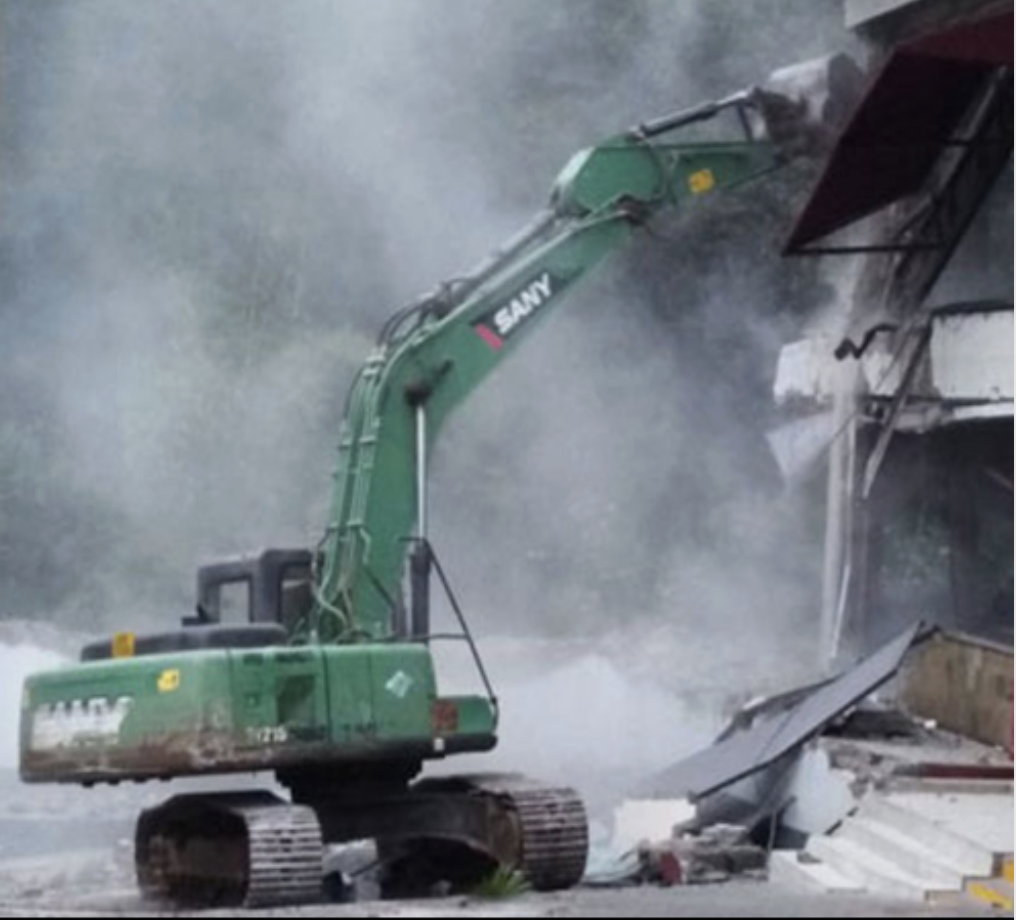
Demolitions have somewhat become a normal occurrence in Nairobi in the recent past.
From tin-roof shanties in Kibera to multimillion-shilling commercial blocks in Kileleshwa, bulldozers have become a near-daily feature, both on our screens and on the ground.
Whether you live in Ngara or Nkoroi, rent a kiosk or own a shopping mall, the message has been consistent and unforgiving: buildings will go, and livelihoods will follow.
And as dust settles and tempers flare, one question cuts through the noise:
Who pays when the walls come down?
A Crisis Affecting Everyone
Many will recall previous demolitions that have swept through neighbourhoods across economic lines — from Ngara, Matopeni, Kibera, Nkoroi, South End Mall, the Shell Kileleshwa block, Merisho estate and even a sitting senator’s car bazaar.
The then-sitting Senator’s – now a sitting Governor’s – establishment being demolished again recently made fresh news headlines.
Ownership status or social class did not matter. What mattered was the excavator’s path.
In most cases, the stated reasons vary:
-
Encroachment into riparian or road reserves
-
Recovery of public land
-
Clearance for infrastructure projects
-
Revoked or irregular planning approvals
Whatever the justification, the outcome for affected property owners, tenants and businesses has looked largely the same — loss, disruption and a scramble for remedy.
After the Dust Settles: Who Carries the Loss?
Those impacted often pursue two routes:
-
Government compensation, through the courts or political channels
-
Insurance claims, where policies exist
And it’s on the insurance front where frustration — and misunderstanding — begin.
Insurance Response Depends on the Detail
When a demolition triggers a claim, the answer rarely sits in emotion or public sentiment. It sits in the policy.
Key questions quickly follow:
-
Was the loss one of the insured perils?
-
What was the proximate cause?
-
Do government action or illegality exclusions apply?
-
Was the property complying with planning laws?
-
Was the risk disclosed fully at placement?
A claim that looks straightforward at face value can quickly turn into a detailed investigation into title and tenure, the history of permits and approvals, any notices of demolition or enforcement, the policyholder’s own diligence, and the chain of events leading up to the loss.
Where those facts are unclear or contradictory, disputes are almost unavoidable.
A Growing Trend — and a Warning
With continued urban expansion, informal settlements, and renewed enforcement, more demolitions are expected.
For insurers and adjusters, that means:
-
Rising frequency of contested claims
-
Closer scrutiny of liability and causation
-
Pressure to balance contract terms with public perception
-
More claims spilling into litigation
Building Capability for a Harder Claims Environment
At Specialty Claims Academy, we’ve made technical preparedness a priority.
Alongside ongoing claims work, we continue to deepen our professional grounding — including recent international certification in damage management and restoration, which strengthens our ability to:
-
assess structural loss,
-
interrogate the chain of causation, and
-
support insurers with defensible, evidence-led decisions.
In a market now confronting collapses, demolitions and planning-related disputes, such expertise is not a “nice-to-have” — it is essential.
Closing Thought
Nairobi’s skyline is being reshaped by enforcement as much as construction.
But when the excavators roll in, the financial aftermath still comes back to familiar insurance questions:
What was insured? Against what? And at whose risk?
Answering those questions fairly — and decisively — demands clarity, competence and independence.
Training & Capacity Development
SCA works with insurers, loss adjusters, brokers and built environment stakeholders to sharpen capability in:
-
Demolition and government-action losses
-
Compulsory acquisition and public authority responses
-
Causation analysis and exclusion application
-
Property loss quantification and documentation
-
Evidence-based reporting and defensible claims positions
If your organisation needs to strengthen its technical approach in managing demolition-related and construction risk losses, we’d be glad to support.
📧 training@specialtyclaims.co.ke
🌐 www.specialtyclaims.co.ke
Author:
Fredrick A. Oloo
BCom (Ins.), Dip CII, Dip CILA
Lead Trainer & Director – Specialty Claims Academy (SCA)
( Also: Managing Director – Niche Loss Adjusters & Marine Surveyors Ltd
Council Member – Institute of Loss Adjusters & Risk Surveyors (IARS – Kenya)
Committee Member – Chartered Institute of Loss Adjusters (CILA – UK)’s Future Focus Special Interest Group