

Nairobi | 12 January 2026
Nairobi woke to troubling news over the weekend — yet another structural collapse, this time in Karen.
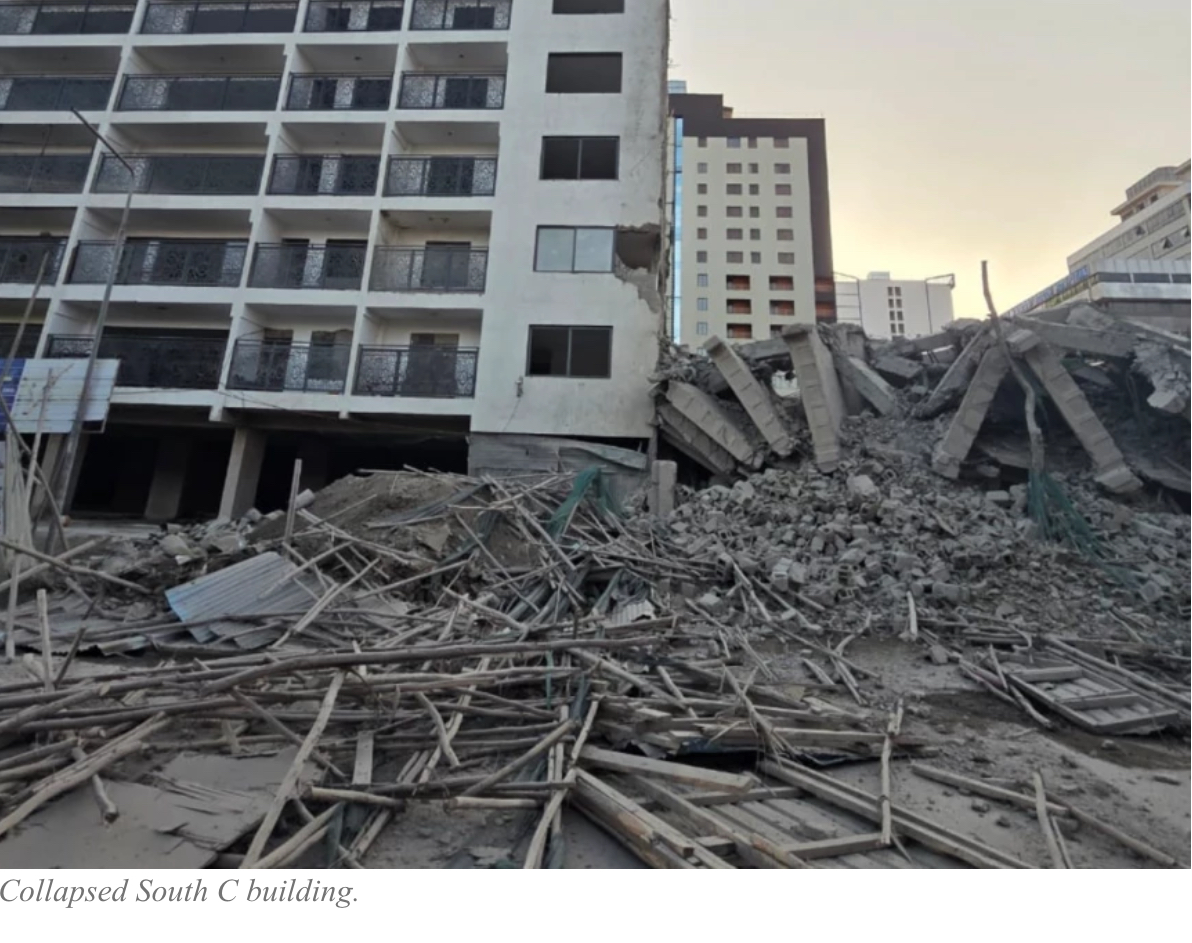
This follows closely on the heels of the catastrophic fall of a 16-storey building in South C, an incident that dominated national headlines just days earlier.
These events are not isolated. In the last 18 months alone, Kenya has witnessed:
-
The collapse of a 9-storey building in Mombasa (April 2025)
-
A 7-storey failure in Kahawa West (October 2024)
-
A 5-storey collapse in Uthiru (May 2024)
Each incident has resulted in loss of life, displacement of families, and millions in property damage and liability exposure — both insured and uninsured.
An Alarming Pattern
Professional bodies have issued sobering assessments.
Following the South C collapse, representatives from the Institution of Engineers of Kenya (IEK), The Architects Alliance (TAA) and Kenya Institute of Planners (KIP) estimated that up to 85% of buildings in Nairobi may be unsafe for habitation.
Underlying causes range from:
-
Weak structural design
-
Substandard construction materials
-
Inadequate professional supervision
-
Non-compliance with regulatory approvals
-
Cost-cutting & commercial pressure
The result is a heightened risk environment for developers, professionals, insurers, and the public.
Navigating the Fallout: Insurance & Claims Realities
When buildings collapse, losses spill across multiple insurance classes, including:
-
Contractors All Risk (CAR)
-
Public Liability
-
Employer’s Liability
-
Property Damage & Business Interruption
-
Professional Indemnity
-
Directors’ & Officers’ Liability
Complex questions follow:
-
Was professional negligence involved?
-
Were regulatory approvals genuine — and followed?
-
Were policy warranties complied with?
-
Who carries responsibility — architect, contractor, engineer, developer, supervisor, regulator?
These matters require rigorous investigation and independence to fairly determine liability and indemnity.
The Role of Independent Adjusters
As collapses rise, the industry can expect:
-
Higher claims frequency
-
Multi-party disputes
-
Increased reliance on expert investigators
-
Heightened regulatory scrutiny
Independent loss adjusters bring clarity — when facts are disputed, responsibility overlaps, or documentation falls short.
Here When You Need Us
Whether supporting insurers, brokers, policyholders, legal firms, or construction professionals, our partner adjusting firms provide evidence-based adjusting and advisory support grounded in technical expertise.
Training & Capacity Development
Specialty Claims Academy (SCA) works with insurers, loss adjusters, and construction-sector stakeholders to build capability and improve technical outcomes.
We design and deliver specialist programmes covering:
-
Structural failure and construction claims handling
-
Professional indemnity exposure in the built environment
-
Loss assessment, documentation and quantification
-
Evidence-led investigation techniques
-
Liability allocation and reporting standards
If your organisation would like to strengthen its capacity in managing construction-related claims, we’d be glad to collaborate.
📧 training@specialtyclaims.co.ke
🌐 www.specialtyclaims.co.ke
Author:
Fredrick A. Oloo
BCom (Ins.), Dip CII, Dip CILA, BDMA Ins Tech
Lead Trainer & Director – Specialty Claims Academy (SCA)
( Also: Managing Director – Niche Loss Adjusters & Marine Surveyors Ltd
Council Member – Institute of Loss Adjusters & Risk Surveyors (IARS – Kenya)
Committee Member – Chartered Institute of Loss Adjusters (CILA – UK)’s Future Focus Special Interest Group