
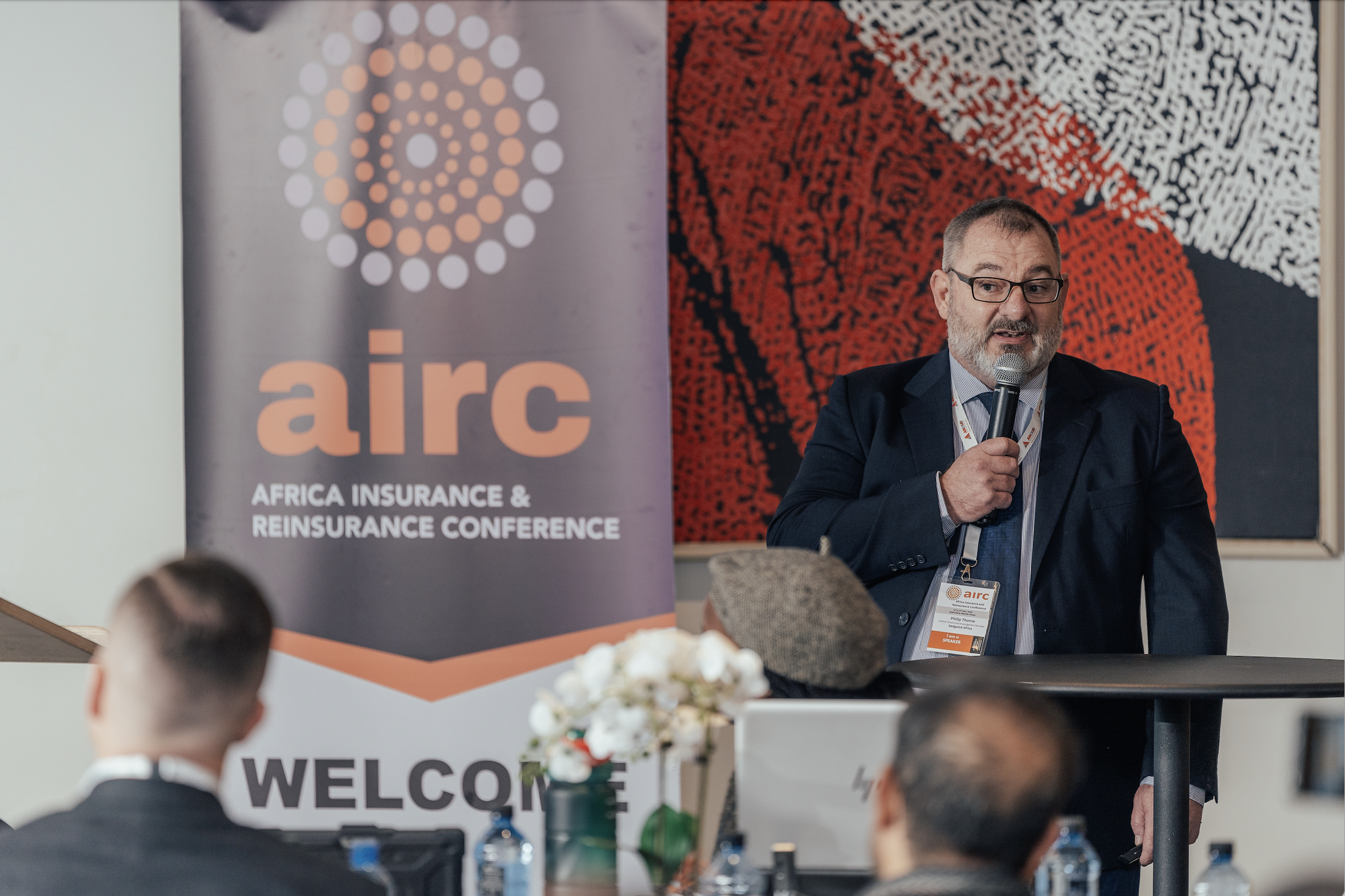

Insights from the Africa Insurance & Reinsurance Conference 2025 | June 2025
During the 2025 Africa Insurance & Reinsurance Conference held in Nairobi, Philip Thorne, Adjuster and Investigator at Sedgwick South Africa (BSc Hons, ACFE Affiliate), delivered a compelling presentation on the evolving landscape of insurance fraud, crime, and social dynamics across the continent.
His talk explored the intersection between criminal behavior, societal pressures, and the insurance industry’s collective responsibility to protect integrity within financial systems.
Understanding the Fraud and Crime Landscape
Mr. Thorne began with sobering statistics from South Africa — where the country records approximately 27,000 murders annually — underscoring the social realities within which fraud and crime often occur.
While crime rates have fluctuated in recent years, the broader message was that fraud thrives in environments of social strain, inequality, and weak institutional collaboration.
He drew parallels between South Africa and other African economies, including Kenya, highlighting how economic pressures, unemployment, and opportunity gaps can create fertile ground for financial crime and moral compromise.
Case Studies: Familiar Faces, Familiar Lessons
Illustrating his points, Mr. Thorne referenced well-known fraud and deception cases — from Charles Ponzi’s historic investment scam to modern-day examples such as Anna Delvey, whose story inspired global media coverage, and Brenda Chepkerui, a Kenyan implicated in visa fraud.
He also referenced the chilling case of Rosemary Ndlovu, a former South African police officer turned serial killer, whose actions were motivated by insurance payouts.
Each case, while extreme in nature, underscored a deeper truth: fraud is not just a financial act — it is a human behavior rooted in motive, opportunity, and rationalization.
Loss Adjusters: The Eyes and Ears of the Industry
From an operational standpoint, Mr. Thorne reaffirmed the pivotal role of loss adjusters in safeguarding the integrity of the insurance ecosystem.
Adjusters, he emphasized, serve as the “eyes and ears” of insurance companies — tasked not only with validating claims but also with protecting insurers’ reputations, retaining genuine customers, and ensuring financial sustainability.
Their role goes beyond technical assessment; it demands a blend of investigative intuition, ethical clarity, and social awareness to identify potential red flags and prevent exploitation of the system.
Fraud: The Human Factor
Defining fraud as an unlawful and intentional act driven by deception for financial or personal gain, Mr. Thorne highlighted that the issue cannot be addressed through legislation or technology alone.
Fraud, he noted, is as much a behavioral and social problem as it is a legal one — influenced by personal circumstances, peer dynamics, and societal norms.
This calls for a multi-dimensional response — one that incorporates education, behavioral insight, and early intervention alongside conventional risk controls.
Collaboration as a Solution
Central to Mr. Thorne’s message was the power of collaboration.
To effectively tackle fraud and broader societal challenges, the industry must “work together, team up, and unite against crime.”
He called for deeper collaboration between insurers, regulators, investigators, law enforcement agencies, and community structures.
Such partnerships can help build shared intelligence frameworks, improve fraud detection, and foster mutual trust across institutions and markets.
Geographically, he noted the growing concern over crime and fraud across major African cities — with Nairobi ranked among the top 10 in certain crime indices — a reminder that these challenges transcend borders and require regional cooperation.
The Human Element in Prevention
Mr. Thorne concluded by emphasizing that people remain the most critical resource in addressing both insurance fraud and wider societal risks.
Investing in human capability — through training, ethical awareness, and professional development — is key to ensuring that the industry remains vigilant, resilient, and responsive to evolving threats.
He also called for continuous learning and adaptation, as new technologies and criminal methodologies emerge faster than traditional frameworks can respond.
Collaborate, Unite, Prevent: A Shared Responsibility
The presentation closed with a simple but powerful call to action — “Collaborate. Unite. Prevent.”
It’s a motto that resonates deeply within the insurance and loss adjusting profession: that the fight against fraud, like the preservation of trust, is a collective endeavor.
At Specialty Claims Academy (SCA), we share this conviction. SCA remains committed to supporting insurers, loss adjusters, and investigators through targeted training and technical programmes that address fraud detection, investigative skills, ethical decision-making, and professional conduct.
By fostering collaboration, enhancing knowledge, and strengthening integrity, we can collectively build a more transparent and accountable insurance environment across Africa.
📧 training@specialtyclaims.co.ke
🌐 www.specialtyclaims.co.ke
Author:
Fredrick A. Oloo
BCom (Ins.), Dip CII, Dip CILA
Lead Trainer & Director – Specialty Claims Academy (SCA)
( Also: Managing Director – Niche Loss Adjusters & Marine Surveyors Ltd
Council Member – Institute of Loss Adjusters & Risk Surveyors (IARS – Kenya)
Committee Member – Chartered Institute of Loss Adjusters (CILA – UK)’s Future Focus Special Interest Group